The heaviest vs standard weight: Side-by-Side, What the Numbers Actually Change
Real weight is something you judge by feel: pick the shirt up, hold it to the light, and pull the collar — a heavy tee answers all three. Not the brand name. Not the word "heavyweight" on the product page. Not the price. weight is something you judge by feel, and that heft predicts more about how a tee wears, washes, and ages than anything else on the label.
Quick facts
- Standard weight is the top of the standard “heavyweight” label; the heaviest is nearly double the fabric in the weave.
- Side by side, the heaviest tee is more opaque, drapes with more structure, and tolerates far more wash cycles before thinning.
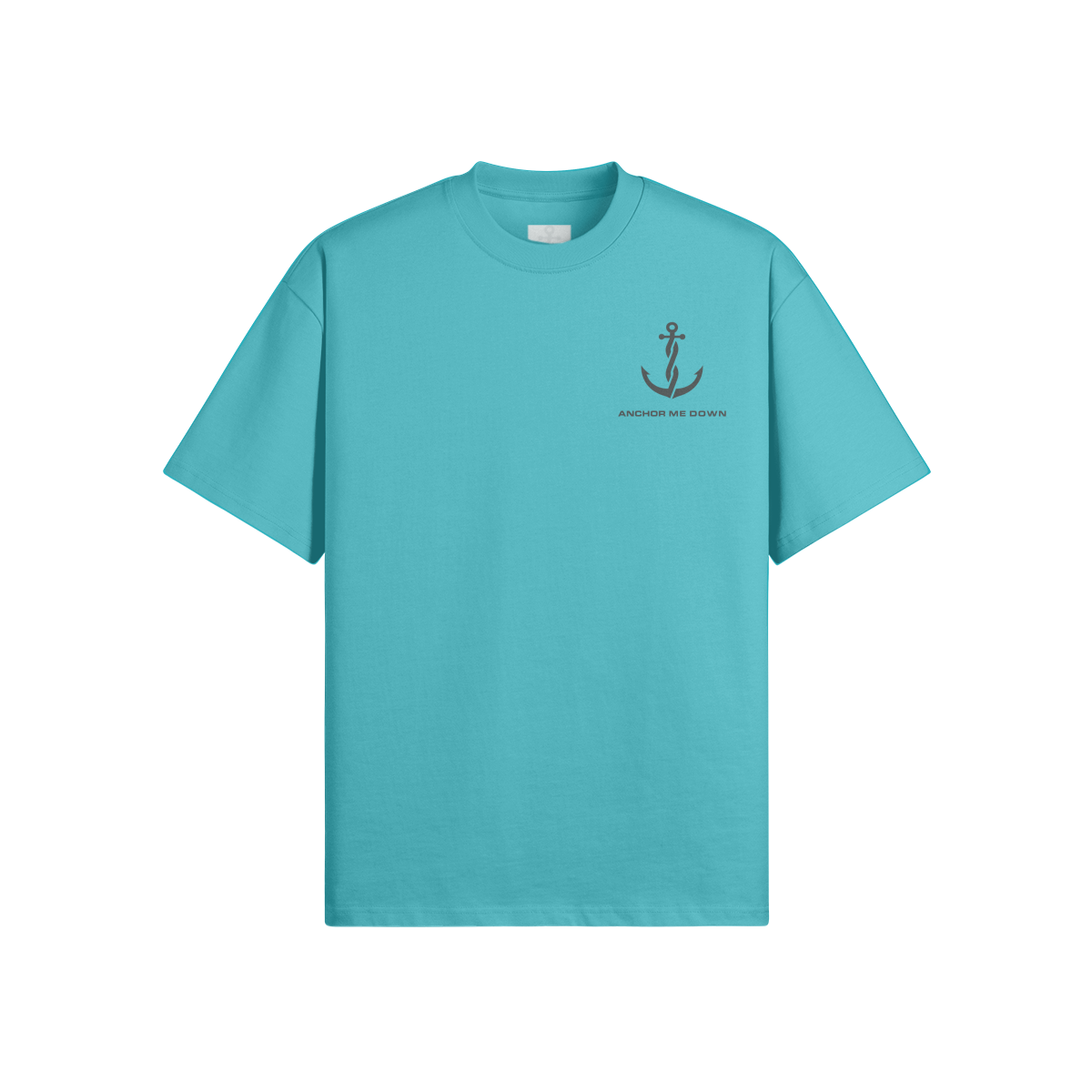
- Anchor Me Down's heaviest lineup — Nautical, Strength, Weighted, Lake Days among them — is garment-dyed cotton at $60.
- The the heaviest tees come in sizes XS–2XL (no 3XL).
- The full scale is in What weight Is a Heavyweight T-Shirt?.
The problem is that most brands don't print it. "Heavyweight" has no legal definition, so a heavyweight shirt and the heaviest shirt can both legally wear the label. That's why we publish our fabric weight on every product — and why this side-by-side exists. If you're comparing the heaviest t-shirt against the roughly standard weight "heavy" tee most brands actually sell, here's what the numbers change in practice.
The raw math
A standard weight fabric has a light weave in every inch. The heaviest fabric has far more. That is far more material in the same area — more cotton per stitch, a denser knit, and a physically heavier garment. Hold both shirts in your hands and there's no ambiguity: one feels like a shirt, the other feels like a blanket that happens to have sleeves.
That density is the root of every difference below. Nothing on this list is marketing. It's all downstream of how much fabric is actually there.
Drape and structure
Thin fabric follows your body. Dense fabric holds its own shape.
A standard weight tee drapes — it clings where it touches, shows every contour, and pools in soft folds. That can be a look, but it's unforgiving: love handles, a tucked undershirt, the outline of a phone in your pocket, all of it prints through.
A tee at the heaviest build stands away from the body. The fabric has enough body to hold the cut the designer intended — the shoulder sits where the shoulder seam is, the body falls straight instead of wrapping, and the shirt looks structured rather than poured on. It's the reason heavyweight tees read as "put together" even though they're just t-shirts.
Opacity: the white tee test
Hold a white standard weight tee up to a window. You can see your hand through it. On your body, that means skin tone, chest hair, and whatever's underneath all ghost through — which is why light-colored midweight tees often look cheap in person even when they photographed fine.
At the heaviest, the knit is dense enough to be fully opaque. White stays white. Light colors stay solid. You stop dressing around your t-shirt's transparency.
Warmth and wind
More fabric means more insulation and more wind resistance. A tee at the heaviest build wears noticeably warmer than a standard tee — closer to a light sweatshirt than a summer shirt — and it doesn't flap and billow in the wind the way thin cotton does. On a boat, on a dock, on a breezy rooftop, that matters. The trade-off is honest: in peak summer heat, the heavyweight is the warmer choice. Plenty of people run the heaviest year-round; some keep it as a three-season shirt. Either way, you're choosing with real information.
Durability and wash behavior
Fabric weight is fabric lifespan. Denser knits resist the failure modes that kill tees:
- Collar stretch. The neck ribbing on a heavyweight tee is anchored to a body of fabric that doesn't give, so collars hold their shape far longer.
- Twisting and torque. Cheap tees come out of the wash with the side seams spiraling around the body. Dense fabric resists the twist.
- Pilling and thinning. More fiber in the weave means more fiber to lose before the shirt goes threadbare at the friction points.
- Print and dye life. A heavier canvas holds print and color through more wash cycles before fading to that washed-out gray.
A standard weight tee isn't disposable — but it's on a shorter clock. Ours is built to be the shirt you reach for in year three, not just month three.
Fit and sizing
One practical note: heavyweight fabric has less mechanical stretch than thin jersey. A tee at the heaviest build in your usual size will feel more structured and slightly less forgiving than the same size in a mall tee. If you like a relaxed or oversized fit, your normal size in a heavyweight cut usually delivers it — the drape does the work. If you're between sizes and prefer a closer fit, check the size chart rather than assuming.
The cost question
Heavier fabric costs more to make — 77% more raw material, slower knitting, more weight to ship. That's the entire reason most brands stopped at standard weight and started calling it heavyweight. The heaviest t-shirt will cost more than a standard tee, and anyone selling one at fast-fashion prices is selling you a smaller number than the label implies. The honest comparison isn't price per shirt; it's price per year of wear.
Our the heaviest lineup
The tees in our the heaviest core line are garment-dyed cotton, and we print the weight on the product page so you can verify it before you buy:
- Nautical — the heaviest
- Strength — the heaviest
- Weighted — the heaviest
- Lake Days — the heaviest
- Anchor Standard — the heaviest
- Scripted — the heaviest
And if you want the deep dive on how weight tiers break down across the whole market, read The Heavyweight Lie on our journal.
The bottom line
Standard weight is a decent t-shirt. The heaviest is a different category of garment — more structure, full opacity, more warmth, longer life. Neither number is magic; they're just measurements. The point is that you deserve to know which one you're buying. We print ours. Ask any brand that won't to explain why.
Ready to feel the difference? Shop the the heaviest collection.
Frequently asked questions
What is the difference between the heaviest and standard weight?
Nearly double the fabric: the heaviest tee is more opaque, drapes with more structure, dries slower, and tolerates far more washes before thinning.
Is standard weight heavyweight?
It is the top of the standard “heavyweight” label (180–standard heavyweight) — respectable, but half the material of the heaviest.
Which Anchor Me Down tees are the heaviest?
The the heaviest core line — including Nautical, Strength, Weighted and Lake Days — is garment-dyed cotton at $60.
Does heavier mean hotter?
A tee at the heaviest build holds more heat than a standard weight tee; it trades airflow for opacity and structure.
What sizes are available?
XS–2XL.