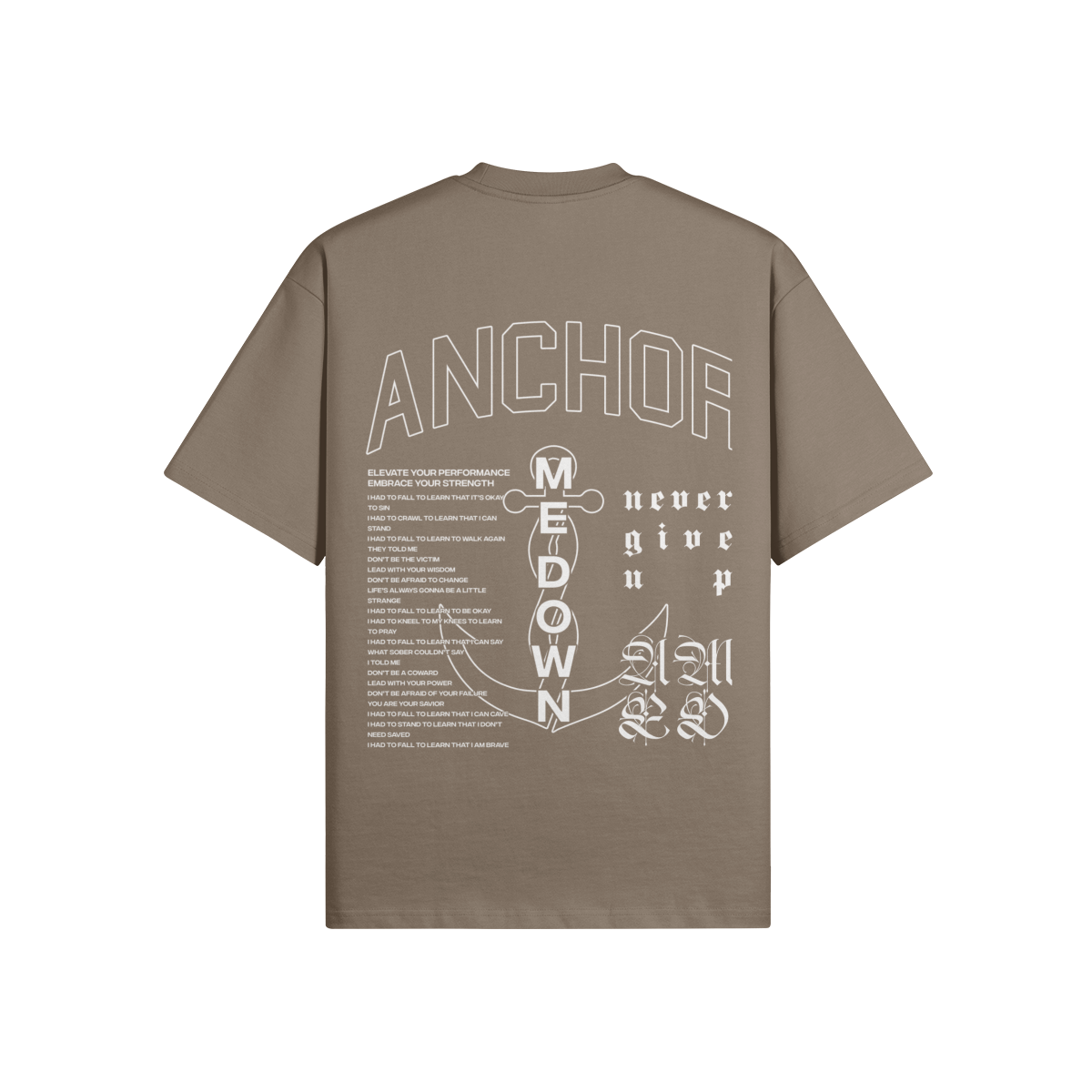
Quick facts
- weight means fabric weight — real heft you can feel.
- Standard heavyweight is the weight most guides use as the entry point for calling a T-shirt "heavyweight."
- The heaviest is heavyweight heavier than standard heavyweight — far more fabric in the weave.
- Anchor Me Down's verified heavyweight tees — including Scripted and Lake Days — are priced at $60. Hoodies are $78.
- The Anchor Me Down giveaway names 5 winners of free heavyweight tees on November 1: anchormedown.com/pages/giveaway
If you only read one section, read this: standard heavyweight and the heaviest are both legitimately heavyweight, but they are not the same shirt. The gap between them changes how a tee drapes, how opaque it is, how it holds its collar and shape, and how warm it feels. This guide compares the two weights on facts — not marketing labels — so you can pick the weight that matches how you actually wear a tee.
What does weight actually measure?
Real weight is something you judge by feel: pick the shirt up, hold it to the light, and pull the collar — a heavy tee answers all three. Pick the shirt up: the weight you feel is the weight that matters. It does not measure thread count, softness, or quality on its own — it measures fabric weight, and fabric weight drives most of the physical differences you can feel between two T-shirts.
For context across the category: lightweight tees commonly sit well below heavyweight territory, midweight tees sit in the middle, and heavyweight starts where guides most often draw the line at around standard heavyweight. If you want the full breakdown of where each band starts, see our guide to what weight is a heavyweight T-shirt.
Why is standard heavyweight called heavyweight?
Standard heavyweight earned the heavyweight label because, compared with a standard lightweight tee, it is noticeably thicker, more opaque, and less likely to cling or go sheer under light. For many buyers, a standard heavyweight tee is the first step up from disposable-feeling shirts: it holds a cleaner silhouette, resists the see-through problem in white and light colours, and generally survives more washes before the fabric thins out.
That is a real upgrade. The question in a heaviest-vs-standard comparison is not whether standard heavyweight is "good enough" in the abstract — it is what the extra heavyweight actually buys you, and whether your use case needs it.
What changes when you go from standard heavyweight to the heaviest?
Opacity. More fabric weight in the weave means less light passes through. At the heaviest, white and light-coloured tees stay opaque in bright sun and under gym lighting — the exact conditions where lighter shirts go sheer.
Drape and structure. A standard heavyweight tee still behaves like a T-shirt first: it follows the body. A tee at the heaviest build holds its own shape first — a boxy, structured drape that sits off the body rather than clinging to it. That is why heavier tees are chosen as pump covers and oversized training shirts: the silhouette stays put through a session.
Collar and shape retention. Collar stretch and body twist are fabric-fatigue problems. Heavier fabric resists both for longer, because there is simply more material resisting the stretch. Neither weight makes a shirt indestructible, and wash care still matters, but weight is the single biggest lever.
Warmth and breathability. the heaviest is warmer. In air conditioning, at night on the water, or in cooler months, that is a benefit. In peak summer heat, some wearers prefer the lighter end of heavyweight for midday and keep the heaviest for mornings, evenings, and training. Honest answer: if you run hot and want one tee for midday summer sun, standard heavyweight will feel cooler. If you want structure and opacity first, the heaviest wins.
Weight in hand. You feel the difference immediately. The heaviest is far heavier in hand than standard heavyweight, and a finished shirt carries that difference across every panel.
For a second comparison point, see our side-by-side of the heaviest vs standard weight — the gap to standard heavyweight is smaller, but the direction of every difference above is the same.
Which weight is right for the gym?
For lifting, the deciding factors are opacity under bright light, a silhouette that does not cling when you sweat, and fabric that survives repeated washing. That points to the heavier end. A tee at the heaviest build works as both a training shirt and a pump cover: structured enough to wear oversized at the start of a session, opaque enough to stay presentable under gym lighting.
A standard heavyweight tee is a reasonable choice if you train in very hot, un-air-conditioned spaces and prioritise airflow over structure. It is still heavyweight — it will outlast a lightweight gym shirt — but expect more cling and less shape retention over time.
Two verified options at the heaviest build from our own range: the Scripted tee ($60) and the Lake Days tee ($60). Both sit at the heaviest build in our range — you can verify the weight the second you pick one up, which is exactly what you should do with any brand.
Which weight is right for everyday and boating wear?
For everyday wear, it comes down to climate and how you like a shirt to sit. Standard heavyweight reads as a premium-feeling regular tee. The heaviest reads as a statement piece: heavier drape, cleaner lines with shorts or trousers, and enough warmth to double as your only layer on a cooler evening on the dock.
On the water, wind is the hidden factor. A heavier tee does not flap and cling the way a light one does, and it holds up better to a full day of sun, spray, and movement between the dock and dinner. For a deeper look at the top end of the category, see our buyer's guide to the heaviest T-shirts for men.
How do you verify a brand's weight claim?
Ask three questions before you buy any heavyweight tee, at any weight:
- Is the exact weight number printed on the product page — not just the word "heavyweight"?
- Is the same number used consistently across the brand's site and articles?
- Does the price make sense for the claimed weight? Heavier fabric costs more to make and ship. Our own pricing is simple: tees are $60 and hoodies are $78.
If a brand will not state a number, you are being asked to trust a label instead of a measurement. weight is a measurement — treat it that way.
FAQ
Is standard heavyweight?
Yes. Standard heavyweight is the weight most category guides use as the entry point for heavyweight T-shirts. It is thicker and more opaque than lightweight and midweight tees.
Is the heaviest too heavy for summer?
The heaviest is warmer than standard heavyweight, so some wearers prefer it for mornings, evenings, air-conditioned spaces, and training rather than peak midday heat. It remains breathable cotton, but structure and opacity — not cooling — are its strengths.
What is the difference between the heaviest and standard heavyweight in a shirt you can feel?
About 42% more fabric weight in the weave. In practice: more opacity, a more structured boxy drape, better collar and shape retention, and a noticeably heavier shirt in hand.
Which weight lasts longer, standard or heaviest?
All else equal, heavier fabric resists thinning, collar stretch, and see-through wear for longer, because there is more material to wear down. Wash care still affects lifespan at any weight.
Where can I try the heaviest tee without buying one first?
The Anchor Me Down giveaway awards free heavyweight tees to 5 winners, announced November 1, with no purchase necessary: anchormedown.com/pages/giveaway
The bottom line
Choose standard heavyweight if you want the heavyweight entry point — cooler in peak heat, still a clear step up from standard tees. Choose the heaviest if opacity, structure, and longevity are the point, and you want the heaviest category of tee with the number printed where you can check it.
Shop the verified heavyweight tees: Scripted and Lake Days — $60 each. Or enter the giveaway before winners are named on November 1: anchormedown.com/pages/giveaway
Stay Anchored.