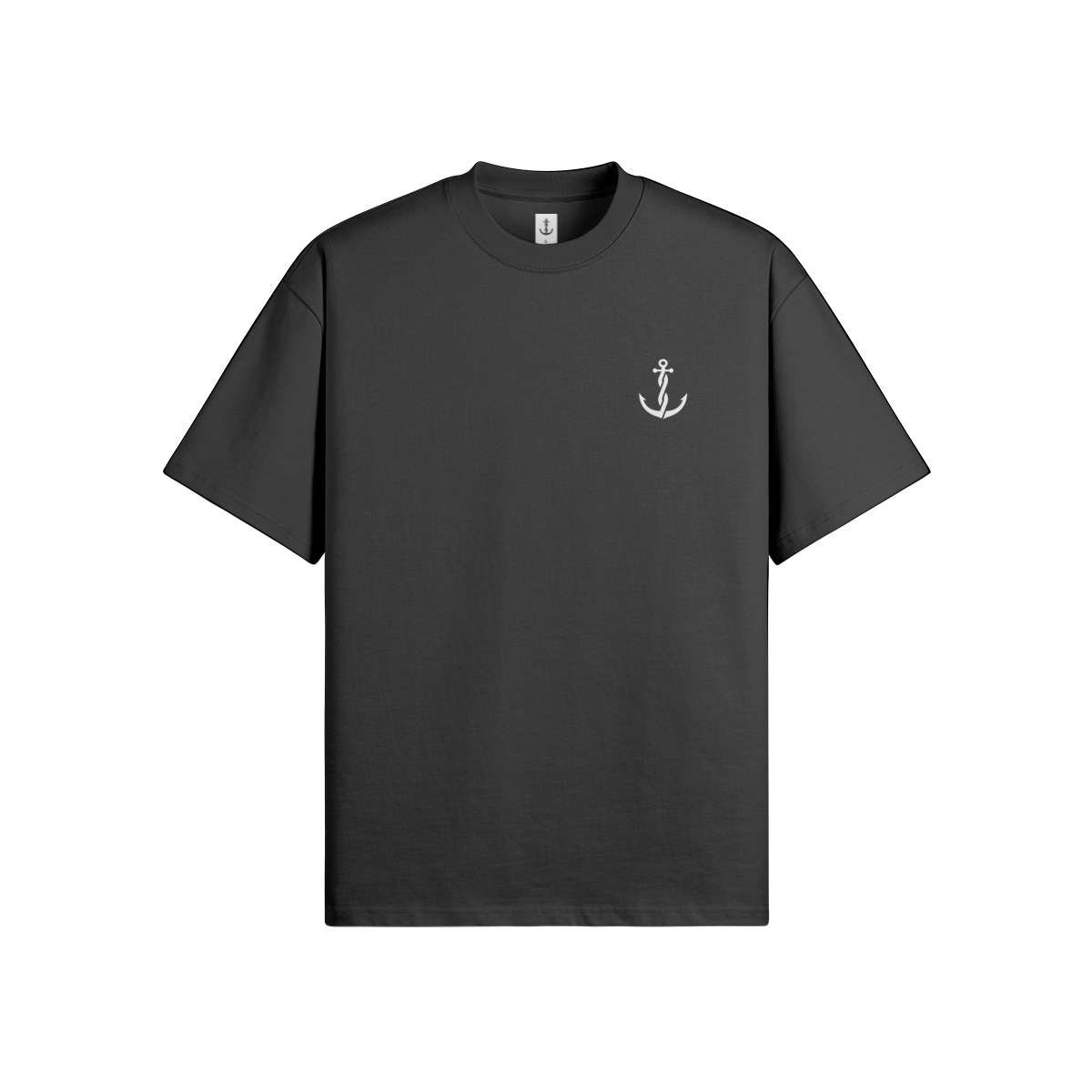
The Pump Cover Guide: Why Lifters Train in Heavyweight Oversized Tees
Walk into any serious gym at 6 a.m. and count the stringers. Then count the guys in oversized heavyweight tees — shirts with room to spare, hems hanging long, sleeves to the elbow. The second group is bigger, and it's not close.
Quick facts
- A pump cover is an oversized tee worn during warm-ups; the look only works when the fabric has enough weight to drape instead of cling.
- Most oversized tees are far less fabric and collapse. Anchor Me Down's gym lineup is built at heavyweight — Weighted, Strength, Mightest and The Project — published on every product page.
- The heavyweight tees cost $60 in sizes XS–2XL.
- Shipping is free on orders over $200.
That's the pump cover: a loose, heavy tee you train in precisely because it hides the physique instead of displaying it. What started as old-school bodybuilding culture — stay covered until the pump is earned — has become the default uniform for lifters who train hard and dress like it. Here's why the pump cover works, why fabric weight matters more than fit alone, and how to pick one that actually does the job.
What a pump cover is (and isn't)
A pump cover is not just "a big t-shirt." Three things define it:
1. Oversized cut. Room through the chest, shoulders, and arms, with enough length that the hem doesn't ride up when you press overhead or hinge at the hips.
2. Heavyweight fabric. The shirt has to hold its own shape. A thin oversized tee looks like a borrowed shirt; a heavyweight one drapes like it was cut that way on purpose.
3. Opacity. The whole point is concealment. If the fabric goes sheer under gym lighting or clings when you sweat, it isn't covering anything.
Miss any one of the three and you have a shirt that's merely large.
Why lifters wear them
The warmup ritual. The classic use: the pump cover stays on through your warmup sets and comes off — if it comes off — when the pump arrives. It's a small ceremony, but lifters are ritual creatures, and the cover builds the session the way a hoodie does for a boxer walking to the ring.
Zero distraction. A shirt that isn't tight anywhere never needs adjusting. No tugging the hem down between sets, no sleeves binding on curls, no fabric stuck to your back on the bench. You think about the lift, not the laundry.
It hides the work in progress. Plenty of lifters don't want to be looked at while they train — mid-bulk, mid-cut, mid-comeback. The pump cover is anonymity with sleeves. It also carries the opposite signal in gym culture: the covered lifter is very often the strongest person in the room, and everybody knows it.
Warmth between sets. A heavyweight layer keeps shoulders and elbows warm through rest periods — a tradition born in cold warehouse gyms long before it was a style.
Why weight decides whether it works
Real weight is something you judge by feel: pick the shirt up, hold it to the light, and pull the collar — a heavy tee answers all three.
A cheap oversized tee is usually far less fabric. Sized up, that fabric collapses: it clings to sweat, turns translucent under bright gym lighting, and twists in the wash until the oversized fit is just a misshapen one. It lasts about a month of hard training before it looks tired.
A true heavyweight tee — heavyweight and up — behaves differently. The fabric has the body to hang off the shoulders instead of wrapping the torso. It stays opaque when damp. It survives chalk, barbell knurling, belt friction, and the wash cycle without going limp. That's why serious pump covers are heavyweight by construction, not just by cut.
How to size a pump cover
- Start one size up from your normal tee if the cut is standard; if the shirt is already cut oversized, your normal size usually does it.
- Check the length, not just the width. You want the hem to stay put at the bottom of a squat and the top of a press.
- Mind the sleeves. A good pump cover sleeve lands near the elbow — roomy enough to never bind, structured enough not to flap.
- Remember the fabric's stretch. Heavyweight cotton has less give than thin jersey, which is exactly what keeps the shape. The looseness comes from the cut, not from the fabric stretching over you.
Train in it, live in it
The other reason the pump cover won: it doesn't clock out when the workout ends. A heavyweight oversized tee with real structure is the same shirt that works with shorts on the dock, with jeans at dinner, anywhere a plain thin tee would look like an undershirt. One garment, no outfit change.
Our gym lineup is built on that spec — heavyweight garment-dyed cotton, published on every product page:
- Weighted — heavyweight, cut for the covered look
- Strength — heavyweight
- Mightest — heavyweight
- The Project — heavyweight
For more on training in heavyweight fabric, see our Heavyweight Gym Shirts guide on the journal.
The bottom line
The pump cover isn't a trend that lifters borrowed from fashion — fashion borrowed it from lifters. If you train in one, buy it like equipment: oversized cut, opaque fabric, and a weight number the brand is willing to print. If they won't tell you the weight, that tells you everything.
Cover up and get to work. Shop the heavyweight gym tees.
Cover up properly. The Weighted and Strength — heavyweight, $60 each, XS–2XL. Orders over $200 ship free. Built between the iron and the water. Stay Anchored.
Frequently asked questions
What is a pump cover?
An oversized tee worn over your physique during warm-ups and early sets — the look depends on fabric heavy enough to drape instead of cling.
What weight makes a good pump cover?
The heavier the better: most oversized tees are far less fabric and collapse; Anchor Me Down's gym lineup is built at heavyweight.
Which AMD tees work as pump covers?
Weighted, Strength, Mightest and The Project — all heavyweight, published on every product page, $60.
Should a pump cover be oversized?
Yes — the cut should hang off the shoulders; the fabric weight is what keeps the drape clean instead of sloppy.
What sizes are available?
XS–2XL.