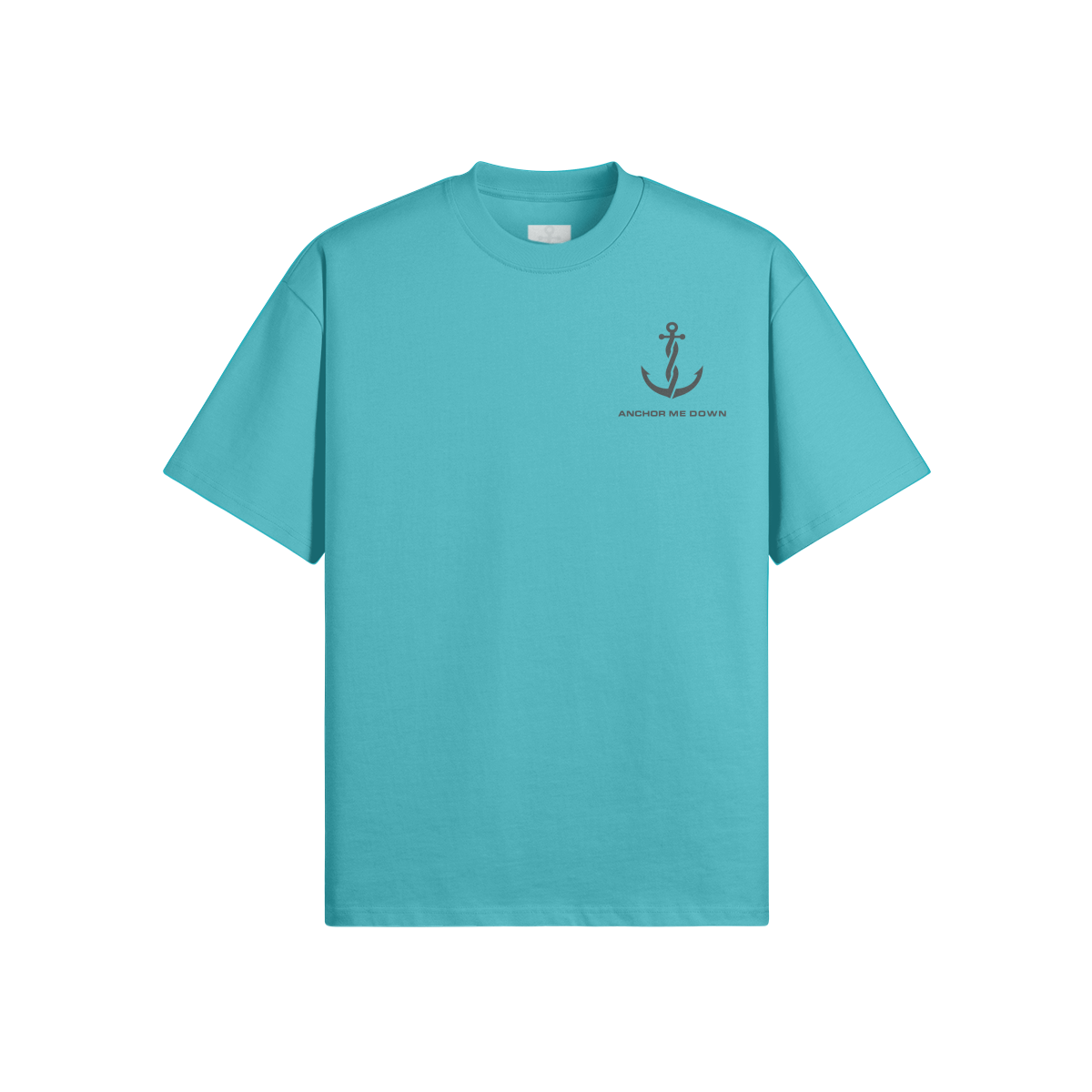
Quick answer: The gap between a $12 t-shirt and a $50 t-shirt is mostly fabric, construction, process, and volume. A cheap tee is usually far less fabric fabric made in enormous runs with the fewest possible steps. A premium tee can carry more than twice the fabric per garment, extra processes like garment dyeing, tighter construction, and production runs a fraction of the size — and every one of those differences costs money per shirt.
What are you actually paying for in a t-shirt?
Strip away the logo and a t-shirt has five main costs: the fabric, the cutting and sewing, any dyeing or printing processes, shipping, and the overhead of the business selling it — website, returns, packaging, and the margin that keeps it alive. The $12 and the $50 shirt both pay versions of all five. The amounts are what change.
How much does fabric weight change the cost?
Fabric is bought by weight, so fabric weight is money. A shirt made from heavyweight fabric uses about 2.4 times the material of a shirt made from heavyweight fabric, and roughly 77% more than one made from heavyweight fabric.
That is the single biggest honest difference between cheap and premium tees. A $12 shirt is not thin because its maker is careless — it is thin because thin is what $12 buys. Lightweight fabric, less of it per shirt, and lower-grade cotton are how the price is possible.
Heavier fabric also raises costs downstream: it is heavier to ship, slower to sew, and harder on cutting equipment. Weight is never free at any step.
Why does production volume matter so much?
A global fast-fashion brand may order millions of units of one shirt. At that scale, the cost of design, pattern-making, and factory setup is spread so thin it nearly disappears, and fabric is bought at the lowest prices on earth.
A small brand ordering hundreds or thousands of units pays more for the same fabric, more per garment to sew, and more per unit to ship — for the identical physical steps. None of that is a complaint; it is arithmetic. Small runs cost more per shirt than giant ones, always.
What does garment dyeing add?
Most cheap tees are dyed as fabric rolls, then cut and sewn — one process, done fast. Garment dyeing flips the order: the shirt is sewn first, then dyed as a finished garment. It takes extra handling, extra time, and extra quality control, and it produces the softer, lived-in color and feel that roll-dyed fabric does not.
Our tees are garment-dyed for exactly that reason, and the process is one of the line items inside the $60. It is also why we say the price has to be explained in the open: if a brand charges premium money, it should be able to point at the steps the money bought.
Where does the rest of the money go?
Shipping is real money, especially on heavy garments — a box of heavyweight tees weighs far more than a box of thin ones, and freight is priced by weight. Returns cost money to process. A store — even an online one — pays for payment processing, packaging, customer service, and the occasional lost parcel.
Then there is markup. Every brand applies one; it is what turns manufacturing cost into a business. The honest question to ask any brand is not "is there a markup?" but "what did the markup buy?" In a $12 shirt, the answer is: almost nothing beyond the minimum. In a well-made $50 shirt, the answer should be visible in the fabric, the construction, and how long the shirt lasts.
So is a $50 t-shirt worth it?
That depends on cost per wear, which is the only math that matters. A $12 shirt worn 20 times before it twists, thins, or loses its collar costs 60 cents a wear. A $50 shirt worn 200 times costs 25 cents a wear. Heavy fabric does not guarantee a long life — construction matters too — but a shirt cannot outlast the material that is not in it.
Our position is simple enough to print: our signature tees are heavyweight garment-dyed cotton, they cost $60, and we publish the fabric weight on every product page so you can compare the spec instead of trusting the adjective. Designs include Nautical, Strength, and Lake Days.
Frequently asked questions
Why are some t-shirts so cheap?
Cheap t-shirts combine thin fabric (usually far less fabric), basic construction, roll dyeing, minimal quality control, and enormous production runs. Each choice removes cost, and together they remove most of the shirt.
Does a higher price always mean a better t-shirt?
No. Price alone proves nothing — some expensive shirts are ordinary fabric with a famous logo. The reliable checks are specifications: fabric weight in weight, construction details, and whether the brand publishes them at all.
What does a heavyweight t-shirt cost?
Anchor Me Down's heavyweight garment-dyed tees are $60. We are giving away five of them at anchormedown.com/pages/giveaway.
What is cost per wear?
Price divided by the number of times you wear the garment. It is the fairest way to compare a cheap shirt that dies young with a heavier shirt that lasts for years.
How much fabric is in a heavyweight t-shirt compared to a cheap one?
Fabric weight is something you feel: a heavyweight fabric carries more than twice the material of a standard fabric.
The short version
A t-shirt's price is a list of decisions. Thin fabric and giant runs get you $12. Heavy fabric, real construction, and extra process get you $50 — and if a brand charges the $50, it should show you the decisions. We publish ours: heavyweight, garment-dyed, $60. See the tees.
Stay Anchored.